• Skip to main content
  • Skip to footer

Vintage Hand Tools

Vintage Hand Tools and Collectables

  • Home
    • News & Blog
    • Testimonials
  • New Stock
    • Recently Sold Items
  • Categories
    • woodworking-534171_640Planes
      • Wooden Planes
      • Metal Planes
      • Spokeshaves
    • chisel-534174_640Chisels
      • Firmer Chisels
      • Bevel Edged Chisels
      • Mortice Chisels
      • Gouges
    • measure-1509707_640Measuring Tools
      • Rules & Tapes
      • Calipers and Dividers
      • Plumb Bobs
      • Squares and Bevels
      • Levels
    • saw-531337_640Saws
      • Tenon Saws
      • Dovetail Saws
      • Hand Saws
      • Other Saws
    • tool-921685_640Braces & Drills
      • Hand Braces
      • Hand Drills
      • Bits
    • tools-1083796_640General Tools
      • Axes
      • Engineer’s Tools
      • Hammers
      • Pliers & Pincers
      • Screwdrivers
      • Spanners & Wrenches
      • Vices & Clamps
    • booksBooks
      • General Woodworking
      • Plane Making
    • garden-tools-1839296_640Everything Else
      • Sharpening Tools
      • Kitchenalia
      • Oil & Grease
      • Garden Tools
      • Collectables
      • Miltary Marked
      • Other Tools
    • VHT Gift CardVHT Gift Cards
  • All Tools
  • Site Info
    • Terms and Conditions
    • Privacy Policy
    • Returns Policy
    • Cookie Policy
  • Tools Wanted
  • Contact
  • Basket

Neil

Why Some Old Kitchen Tools Still Do The Job Better

29 January 2026 by Neil

Sixty quid. That’s about what I paid for a “premium” food mill a few years back. We used it maybe a handful of times before the plastic gears stripped out. The wife wasn’t even hammering it, just making applesauce. Bloody thing just gave up.

Then I borrowed my neighbour’s old food mill to get us “out of the cart”. Battered old beast from the 1940s that had belonged to her mother. Worked perfectly. She gave it to us. We’re still using it now, three years on!
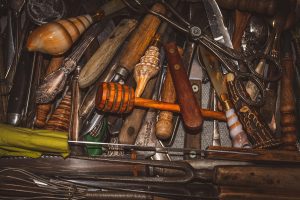
Vintage-Kitchen-Utensils

That’s when I started paying proper attention to what was lurking in the back of my mum’s kitchen drawers, a lot of which had belonged to each of my Grandmothers. Some from my wife’s side, too.

SEE OUR NEW KITCHENALIA CATEGORY

It’s Not Just Nostalgia

There’s a thing about old kitchen tools that most people miss. They weren’t built better because craftsmen had more time or because “they don’t make them like they used to” in some vague, romantic way.

They were built better because manufacturers couldn’t afford not to.

There was no next-day delivery if something broke. No internet to bury poor reviews on page 47 of Google. If your product failed, everyone in town knew about it by Sunday. Reputation mattered. Companies designed for longevity because the alternative was going out of business.

Modern kitchen gadgets often have planned obsolescence built in. Not being cynical, it’s just how it works. Why sell you one mixer that lasts forty years when they can sell you five over the same period? You’ve seen the same with washing machines right?

Cast Iron Reality

I’ve heard people talk about cast iron like it’s this precious, high-maintenance thing. And vintage cast iron is brilliant – I’ll stand by that. My vintage skillet I bought on eBay from God knows when is smoother than any modern non-stick I’ve used.

But can we stop pretending it’s complicated?

The whole “never use soap” business is outdated advice from when soap contained lye, which actually would strip the seasoning. Modern washing-up liquid’s fine. I use it every time. Seasoning’s perfect, unaffected.

Vintage SkilletWhat I think makes vintage cast iron special is the machining. Old pieces were polished smooth. Some new pans come with that rough, pebbly surface because they skip the final machining step because it “costs too much”. The metallurgy changed sometime in the 1950s too, though I’d need someone cleverer than me to explain the exact details. What I can tell you is the difference when you’re cooking eggs.

The heat retention is different as well. Something about how the iron itself was sourced, but that’s beyond my knowledge.

Hand-Crank Tools That Still Make Sense

I picked up an old rotary egg beater for pennies from the car boot sale, the hand-crank type that looks like it belongs in a museum. It does a better job than our electric hand mixer in every way that matters except speed.

It’s worth remembering speed’s not always better.

With the hand-crank, you can feel exactly when the egg whites hit soft peaks, when they’re approaching stiff peaks, and when you’re about to overbeat them into a grainy mess. You’ve got complete control over the rhythm and intensity. No screaming motor, making you wonder if the thing’s about to let you down and pack in.

Your hand naturally adjusts pressure and speed. Then you stop.

With an electric mixer you’re just holding a vibrating machine and hoping you’re paying enough attention to catch the right moment. Plus they’re stupidly loud.

Same goes for hand-crank food choppers. We’ve got a vintage Mouli grater from the 1960s (I think) that does everything our food processor does, except it’s quieter, easier to clean, takes up about six inches of drawer space, and will definitely outlive me.

The Wooden Spoon Situation

Not all old wooden spoons are created equal, but the ones from the 1940s through to the 1960s are a different beast entirely.

The wood itself was harder. Beech or maple, proper hardwood, not the soft stuff they use now. It was  dried and prepared naturally and properly prior to use. Our vintage spoons will have been stirring hot sauces and thick stews for sixty-plus years and barely show wear. The grain’s tight. No splintering.
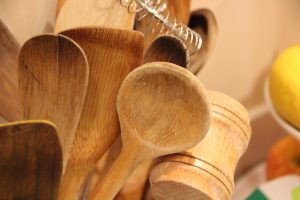
Wooden Utensils

New wooden spoons from the supermarket get fuzzy and rough after maybe four months of regular use. The wood’s too soft.

Also, and this sounds daft, old wooden spoons smell different. Like they’ve absorbed decades of cooking. This warm, faintly sweet scent you can’t quite place. Not unpleasant. Just history.

SEE OUR NEW KITCHENALIA CATEGORY

Where to Find This Stuff (Getting Harder)

Estate sales used to be the place. But they’re getting picked over by resellers who run antique stalls or just turn them over on eBay. You’ll still find gems occasionally, but you’re competing with people who do this professionally.

Better bet: ask old people directly.

Seriously. Your great-aunt probably doesn’t want that stuff. She’s likely trying to downsize. The cast iron skillet taking up space in her garage? She’ll probably just give it to you if you ask.

Church jumble sales are surprisingly good too. Old kitchen tools aren’t sexy enough for the antique dealers, but they end up in donation boxes when people clear out their parents’ houses.

If you’re willing to put in work, beat-up vintage tools are actually better buys than pristine ones. A rusty cast iron pan can be restored with about two hours of work and some elbow grease. That patina on copper polishes right off if you want it to (though I quite like it).

What’s Actually Worth Getting

Not everything old is better. Some stuff is just old and bad.

Cast iron cookware: Absolutely. I’ve been told to look for Griswold, Wagner, or unmarked pieces from the early 1900s. Apparently, they’re noticeably lighter and smoother than modern.

Rotary beaters and hand-crank tools: Yes, if you’ve got the working space and don’t mind the manual work. The control is genuinely better.

Wooden spoons from before 1970: Definitely. Hardwood that actually lasts.
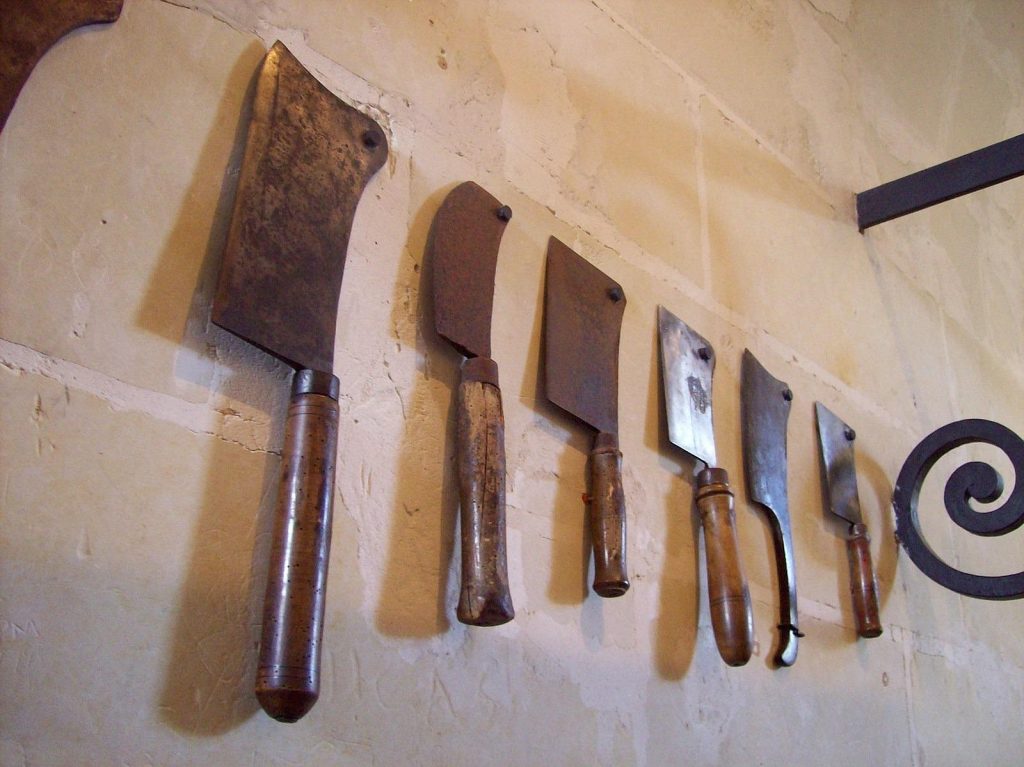
Vintage KnivesVintage knives: Depends. Old carbon steel can be brilliant if you know how to maintain it, but modern knife technology has actually improved in meaningful ways. I’m a sucker for big, old knives. I’ve bought some proper wrecks and turned them round. Bone of contention in our house though because there’s only me looking after them, drying them properly and wiping with a bit of olive oil to avoid flash rusting. This is one area where new might be better unless you really know what you’re doing.

Anything with a motor from before 1990: Probably not unless you’re handy with electrical repair or like the look of it (which I generally do but have been caught out). Motors do wear out.

SEE OUR NEW KITCHENALIA CATEGORY

The Thing About Maintenance Nobody Mentions

Vintage tools require a different relationship with your stuff.

You can’t just chuck everything in the dishwasher and forget about it. Cast iron needs drying properly. Wood needs occasional oiling. Metal develops patina.

Some people hate this. They want convenience above all else.

But there’s something quite satisfying about wiping down a cast iron pan, watching the towel pick up the faintest bit of seasoning, knowing this exact pan cooked someone’s breakfast in 1952. Takes thirty seconds. Not hard.

Modern gadgets promise to save you time, but you spend that “saved” time replacing them every couple of years and dealing with electronics that break in odd ways.

When Modern Actually Wins

Look, I’m not some purist who thinks everything old is superior.

Food processors are legitimately better for certain tasks. Try shredding five pounds of cabbage for sauerkraut with a hand grater and you’ll understand why electric motors were invented.

Instant-read thermometers are vastly better than the old dial ones.

Modern kitchen scales are way more accurate than vintage balance scales, plus they do metric conversions, which matters if you’re weighing tools for Evri 🙂. I do like a vintage scale though.

The key is knowing what each tool does best. Sometimes the old way is genuinely superior. Sometimes you’re just being stubborn and nostalgic.

The difference is durability. Even when modern tools work better, they won’t work for long.

What I’d Tell Anyone Starting Out

Start with cast iron. Just one good pan. Learn to use it properly, which takes maybe three attempts at cooking eggs, not years of practice like the internet claims.

Add vintage tools slowly as you find them. Don’t buy complete sets on eBay for inflated prices. Half the fun is stumbling across them.

And don’t feel guilty using both. My kitchen has a vintage skillet sitting next to a modern coffee grinder. They’re tools, not religious artifacts. The vintage stuff will still be working when the electric gadgets are in a landfill. That’s not romanticism. Just maths and metallurgy.
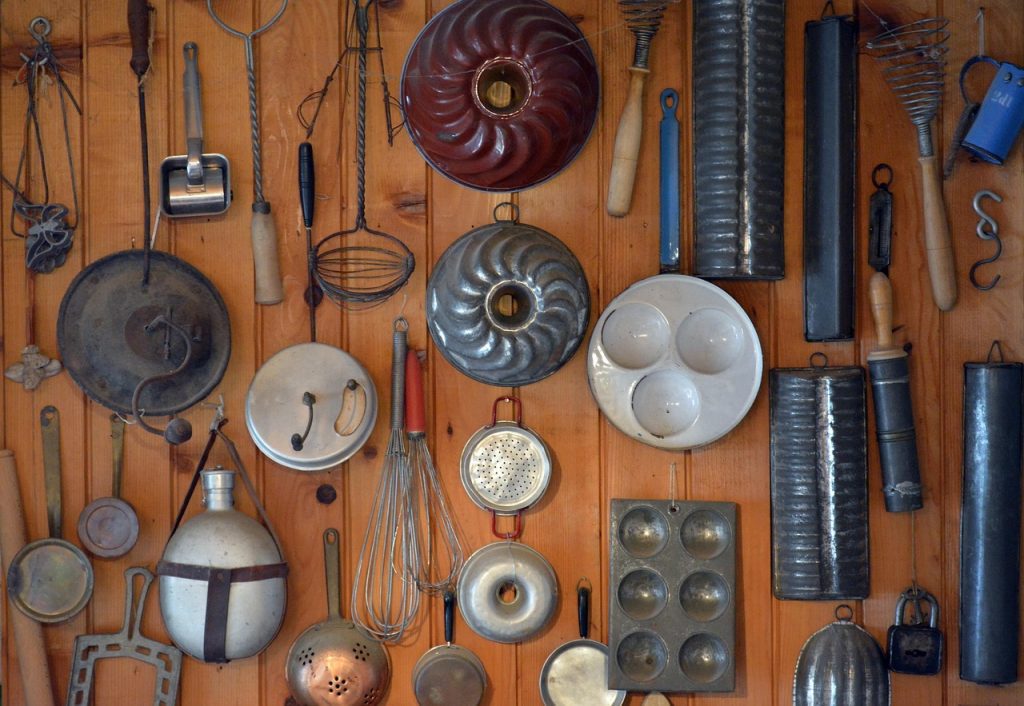

SEE OUR NEW KITCHENALIA CATEGORY


Vintage Household Utensils


Filed Under: History, News Tagged With: Vintage Kitchen Tools, Vintage Utensils

Still Feeling The Love

13 January 2026 by Neil

Just a quick note to recognise the kind feedback I keep receiving and express my gratitude for all your business and interest in Vintage Hand Tools. It’s a labour of love that enables me to find some things that would otherwise have been lost or condemned.

Heres a flavour:

All arrived this morning – thank you. Well packed and with a lovely personal note too. It’s a lovely item which I’ll have a lot of pleasure having in my collection.
Many thanks, – Dave L

I remain committed to delivering the best possible service and am, as ever, grateful to my customers.

I’ve probably mentioned to a lot of customers individually that I have a mountain of tools still yet to list hence I’ve had to hold off buying so much lately, so if you are looking for anything specific, chances are I might have one so please get in touch.

More tool loveliness that’s come my way recently:

Thanks for the note and hammer, will use you in the future – Dave M
Package arrived today. Thank you so much. – Ian P 
Hi Neil
Thanks for taking the time to get back to me and for the helpful info, much appreciated.- Karen S 

An international recommendation!

Subject: New Tool supply shop/site
Message: Hi James. I have found a new resource for sharing please.
https://vintagehandtools.co.uk
Owner is Neil Spruce.
I have just bought a plane from him, service is very good, product is better than expected. Great site. I can supply more details including contact details if you would like.
Very impressed so far. – Ian P
Hello Neil,
I’ve just received the Skarsten scraper blades, very grateful –
Ken B.
Hi Neil
Today I received my Garden Slasher I just wanted to let you know it was the best packaging I’ve ever received ,it arrived absolutely perfect. I am so pleased with the quality and look forward to using it – Thanks Sean

Have a look at the latest tools listed and all around the site. Hopefully there’s something that floats your boat and be confident you’ll always receive the same service.

Thanks again to everybody. I appreciate you.

Neil

Parker - Dusty Dog
Parker – Dusty Dog


Filed Under: Testimonials

More Than a Bucket: Hand Tools Built the British Brewing Trade

15 November 2025 by Neil

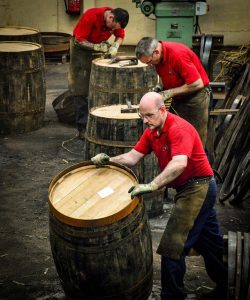
Right then, let’s talk about the Cooper. Not the awesome little car from “The Italian Job”, mind you, but a proper tradesman: one who expertly assembled casks, barrels, vats, and any other vessel made of wooden staves. Coopers were (in fact still are) masters of their craft. Without a good Cooper, much of the world’s trade, and certainly its best drinks, wouldn’t have gone anywhere.

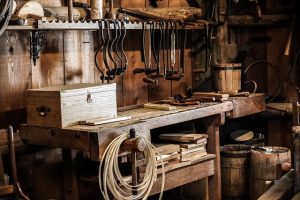
It’s easy to see an old barrel and assume it’s just a rustic wooden tub, as opposed to a marvel of engineering. It’s built entirely without glue, relying only on perfect joinery and tension to hold hundreds of gallons of liquid. Makes most modern equivalents look crap.

A Trade Rooted in History

Coopering goes back practically to when “God was a lad”. The term Cooper coming from the Middle Dutch kūper, but the actual craft is thousands of years old. Evidence has been found of simple crude barrels Circa 5000 BC in the Middle East.

However, the real point of change came from the Romans where the barrel evolved to become the practical, rolling vessel we know. Their Coopers, the cuparii, began phasing out the old wooden or rope bindings and started using iron hoops, meaning the barrels were then strong enough to survive the rough and tumble of long-distance transport, shifting wine, olive oil, and more across their vast empire.

When the Roman Empire faded, the need for robust shipping containers didn’t. During the Medieval period, the barrel confirmed its place as the standard unit of volume and transport. Here in the UK and Europe, the Coopers formed powerful guilds. These weren’t just social clubs; they were serious bodies that laid down the law on quality, pricing, and training. If you were a Cooper in London, York, or Edinburgh, you were considered an indispensable artisan, and they knew their worth!

Three Kinds of Cooperage

Now then, Coopering isn’t just one thing. It’s traditionally broken down into three different specialities, depending on what you’re trying to keep inside the wood:

  1. White Coopering: This was the household stuff. Think pails, tubs, butter churns, and water buckets. Simple, open-topped vessels for things that didn’t need to hold pressure or roll down a hill.
  2. Dry (or Slack) Coopering: These casks were for dry goods: flour, tobacco, dried fish, salt, and maybe some cheap gunpowder. They didn’t need to be perfectly watertight, just structurally sound enough to keep the contents dry and safe.
  3. Wet (or Tight) Coopering: This is the big league, the real craft. These are the watertight casks for liquids: wine, beer, spirits, or oil. This demanded the most skill, as the margin for error was tiny. When you think of a Cooper, this is usually the craft you picture. They were the ones supplying the booming brewing industry, whether it was the stout houses of Dublin or the breweries right here in Yorkshire.

The distinction matters because it dictates the level of precision needed and, crucially, the tools used.

The Craft of Making a Perfect Barrel

If you’ve ever tried to build something out of wood and get a dovetail joint exactly right, you’ll appreciate the sheer skill involved in Coopering. They’re building a complex, curved object that has to withstand internal pressure and external rough handling, all while being perfectly sealed. The apprenticeships weren’t short either; five to seven years was the norm. It had to be, because you appreciate the challenge is getting a vessel to seal without using any kind of glue.

This sealing relies entirely on the meticulous shaping of the staves. These long, narrow slats of wood, usually oak (prized for its strength and the flavour it gives to spirits), need to be cut so that the edge of one stave fits against the edge of the next at a precise angle. Some master Coopers claimed they were working to tolerances of 1/2000th of an inch (be better if it was spot on eh!). Makes for a good story, but either way, that’s intense accuracy for a hand tool trade.
The process was long-winded, involving maybe thirty specialised tools. Here’s the gist:

  • Shaping the Wood: Tools like the Cooper’s side axe were used for the initial rough shaping. Then came the draw knives, or spokeshaves as they might be better known to some, but often much bigger: a rounded hollowing knife for the concave (inside) curvature and a flat backing knife for the convex (outside) curve.
  • Raising the Barrel: Once the staves were shaped, they were arranged in a circle, held together with temporary hoops, and then the serious business started. The wood had to be softened by using a flaming brazier inside the circle or steam to make it pliable. The Cooper then used ropes and windlasses to pull the open end closed, forcing the straight staves into that recognisable bulge, or bilge.

Securing the Heads: After the body was shaped and secured with its permanent iron hoops, the final piece of the puzzle was fitting the heads—the top and bottom. And this is where the sheer precision of the hand plane comes in.

The Topping Plane

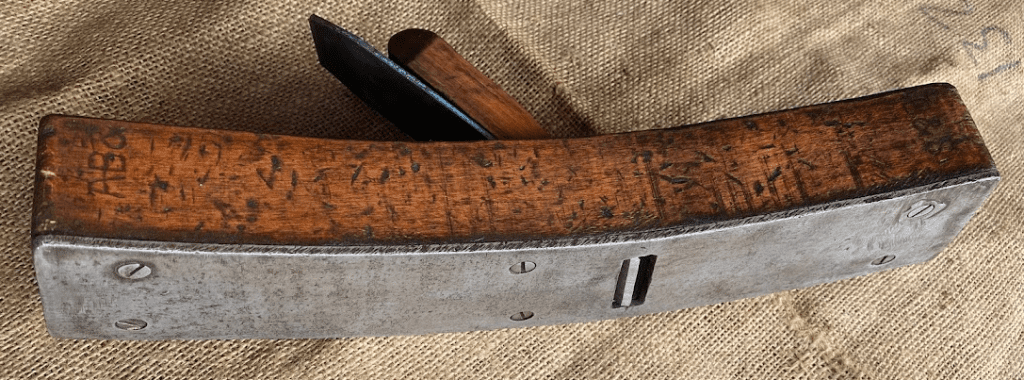
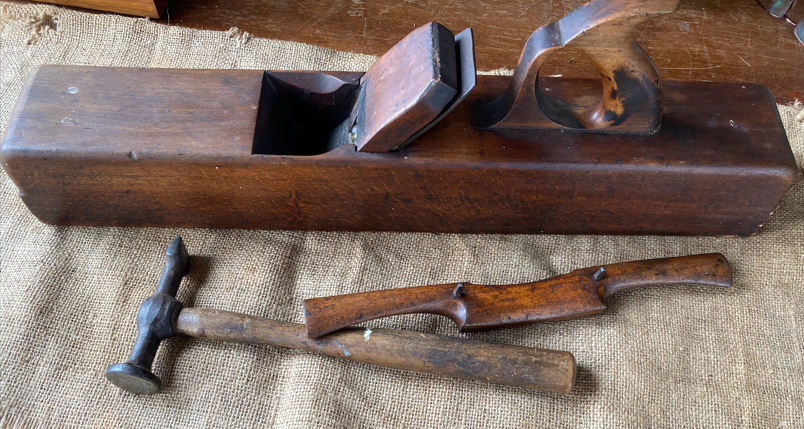
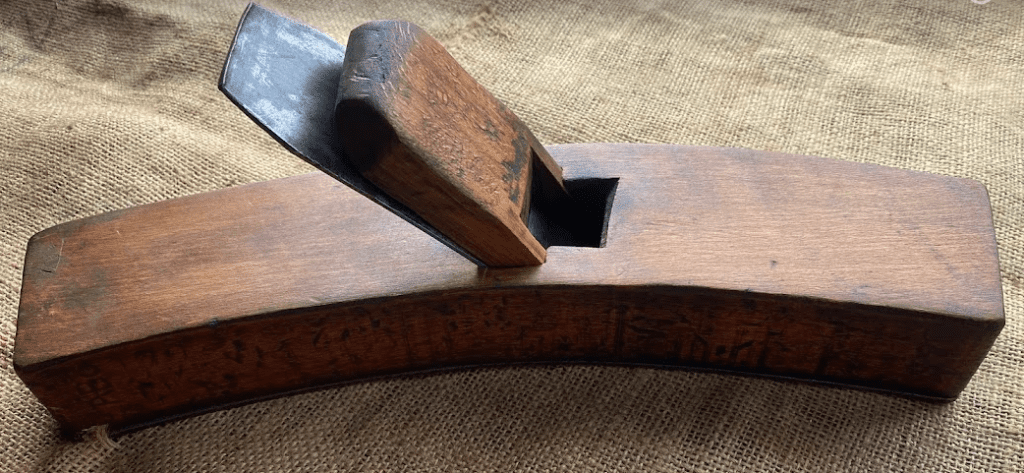
Cooper's Topping or Sun Plane

In wet Coopering, the greatest risk is a leak where the head meets the body of the barrel. It’s asolutely critical. To prevent this, the ends of the assembled staves need to be perfectly flat before the final groove for the head can be cut.

This is the job of one of the trade’s most specialised and fascinating tools: the Cooper’s Topping Plane, sometimes called a Sun Plane.

Think of the barrel as a cylinder on its side with the rough ends of all those individual staves sticking out. You could try and knock them back with a hand adze first, especially on tough oak, but that won’t give you the super-flat surface needed.

The Topping Plane is much like a jack plane but curved in order to work across the top of the staves without tilting. It slides around the entire edge, shaving the ends of all the staves down to a perfectly flat and level surface. It’s the final leveling pass. If this surface isn’t absolutely true, then the next step won’t work, and the barrel will leak. Simple as that.

Once that perfectly levelled surface is achieved, a Cooper would use a special tool, the croze, to cut a tight groove (also called the croze) around the interior of the staves. This recess houses the barrel top, precisely securing it to create a tight seal and prevent seepage. But that can’t happen until the Topping Plane has done it’s job, trimming the edges of the staves to be accurate and flat so the croze can function effectively.

Topping or Sun Plane for Coopering

If it piques your interest, you may be pleased to know I have one for sale: a genuine Cooper’s Topping Plane. A proper piece of history. See here in the shop.

British Coopering: More Than Just Guinness

While the romantic notion of Coopering often heads straight to bourbon in America or wine in France, the UK trade was massive and influential. The brewing industry, particularly the production of Ale and Porter, powered demand for tight Cooperage throughout the 18th and 19th centuries.

In major cities like London, Liverpool, and especially the brewing heartlands of the Midlands and Yorkshire, Coopers were a powerful force. They weren’t just fixing things; they were making thousands of new vessels every year. They even had their own slang, and a good sense of humour with it. If you’re bending heavy oak staves and dealing with hot steam all day, you need a bit of a laugh and maybe a flagon or two.
The legacy here may be best related to the Navy and the merchant fleet. British naval Coopers were absolutely vital. They built the huge vats and barrels needed to carry water, beer, rum, and salted provisions for long voyages. A leaky cask on a ship was a disaster, so the Navy only accepted the very best work. This constant, high-stakes demand kept the British Coopering trade keen and ensured its longevity.

If you want to delve deeper into the tools that underpinned trades like this, I can highly recommend The Handplane Book. It covers everything from the humble smoothing plane to these much more specialised beauties, like the Cooper’s planes. It’s a fantastic resource for any serious tool collector or woodworker, and helps you appreciate just how varied and specific the plane family really is. You can find the book here if it’s of interest. (as an Amazon Associate, I earn from qualifying purchases).

The Enduring Trade

Like many traditional crafts, Coopering took a serious hit after the Industrial Revolution. Machines could shape wood faster, and later, cheaper metal and plastic containers became the norm. Guinness, for example, started swapping out wooden casks for aluminium kegs in 1946, and the last wooden cask was filled in March 1963. A sign of the times!

But the craft has far from gone away, and do you want to know why? Flavour.

You simply can’t replicate the interaction between wood and liquid in a metal or plastic container. The aging process in oak barrels is fundamentally essential to the final product of many fine beverages. Think Scotch whisky, which must, by law, be stored in an oak cask for a minimum of three years and one day. Or fine wine, where the barrel adds complex tannins and aeration. The wood isn’t just a vessel; it becomes an ingredient.

So, while the industry might be smaller, it’s thriving in quality. Master Coopers today still rely on the timeless effectiveness of traditional tools. They understand that for the absolute best result, the ancient methods of meticulous hand-shaping and precision joinery remain superior.

It’s a great reminder that sometimes, the old way really is the best way (who here is gonna argue with that?). And when you pick up a tool like the Topping Plane, you’re not just holding a piece of wood and iron; you’re holding a thread to a craft that’s kept empires running and still keeps the world supplied with the finest drams. Not bad for a bit of joinery, is it?

Cheers!


Filed Under: History, News Tagged With: Coopering Tools

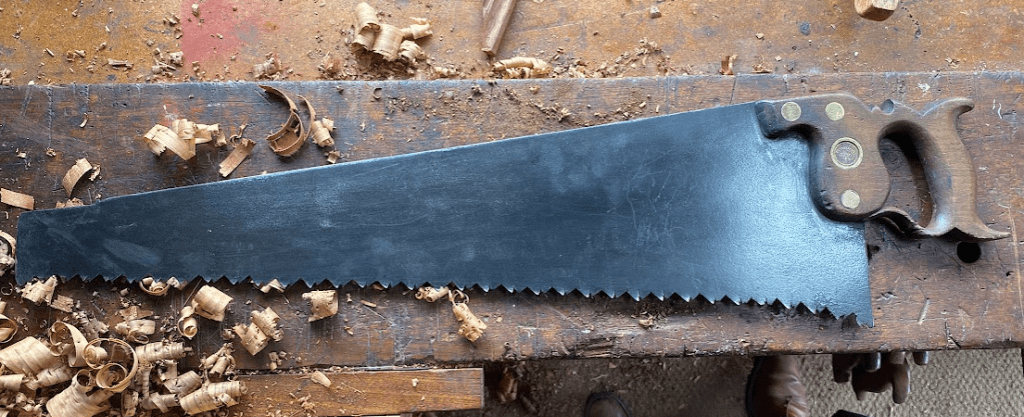
Ugly Brute With Big Teeth is actually a Beauty

30 October 2025 by Neil

You know when you can just sense something is correct? That sixth sense…..

I came across this beast a couple of weeks ago at a local flea market, lurking amongst a few other saws, which, in retrospect, I should have bought given what this has turned up.

Now I’m a bugger for leaving my specs at home, which has hampered me on many occasions. Thankfully, that sixth sense bailed me out here, and the Saw Doctor Gods were smiling on me.

Richard Groves Saw - Ugly Brute With Big Teeth is actually a Beauty

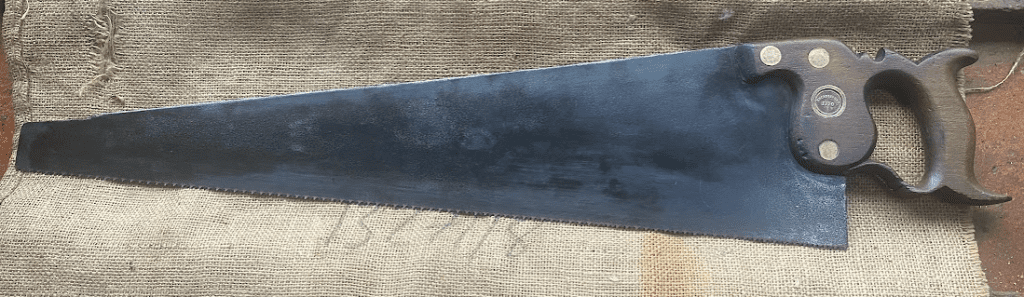
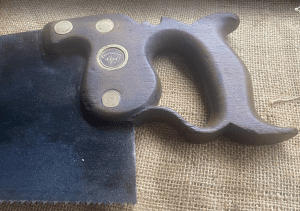
The big teeth were roughly cut and as ugly as “a week on nights”, but something about the tote just looked right with brass saw screws, lovely medallion, and the elegant shaping.

To digress, if you have Simon Barley’s “British Saws and Sawmakers from 1660”,  there is a section on Saw Handle Makers, and I always get the vision of “Old Clegg” who is referenced in the book, crafting these wonderfully ornate handles in a poky little workshop somewhere in Sheffield.

You can find the book here if of interest. It really is a great resource! (As an Amazon Associate I earn from qualifying purchases).

I couldn’t see any mark on the saw without my specs and questioned the price. I was more than pleasantly surprised and snapped it up for a song. After snatching the chap’s hand off, I ventured onward, buying a few other nice bits and pieces in what turned out to be a pretty decent day.

I’ve a thing about welcoming all new tools to the workshop when I get them back home (soft I know) and went on to have a closer look at my finds with a pot of tea. Now adorned with said specs and a magnifying glass, with a bit of light rubbing I found a mark of R Groves & Sons Sheffield. Checking in Simon Barley’s book, it’s Circa 1880.

Can’t tell you how pleased I was, having been a big fan of Richard Groves’s saws since first reading about them on Paul Seller’s blog and later acquiring 2 brass-backed tenon saws. They’re beautiful to use, feel solid and comfortable in the hand.

I called my friend and Hand Saw expert Peter Tiffney who lives nearby and sent him a photo or two, just querying the tooth pattern. His response landed with any number of expletives as to who’d done that to the teeth of such a prestige saw. He told me it had clearly been “adapted” (or bastardised) into a logging-type saw and went on to tell me what needed to happen.

We met up a few days later at the “Vintage Tool Extravaganza”, brilliantly organised once again by Robert Leach at Carlton Scroop in Lincolnshire. I took the saw along and “Tiff” resumed his opinion of the adaptation with more expletives and told me again to get it recut as a cross-cut to 8tpi.

I’ve dropped it in locally this week at The Saw Point in Skellingthorpe, who do a marvellous job and can’t wait to get it back ready to go through the dark sharpening arts with “Tiff”. He’s been teaching me saw sharpening, and this is looking like my next lesson.

Really looking forward to getting it finished and back doing what it should be. Will post and update when it’s done.

Happy Times!

***Update***

Well, I’m a happy badger I have to say.  The Saw Point have done an absolutely sterling job and I have an 8tpi cross-cut that’s just a joy! Have put a bit of time, BLO and polish into the handle and carefully re-attached (scared me to death a nice medallion like that as fragile as it is). Cuts as “sweet as” but I still might go and call on the old “saw doctor” himself Pete Tiffney to tickle it further. Job done, love it!


Filed Under: History, News

Their “Wrightful” place

6 February 2025 by Neil

As a kid I always collected things much to my parent’s despair, I’m sure. Like a squirrel.

Things I specifically remember are postage stamps, beermats, Top Trumps cards (remember them?) and Paganini Football stickers.

And it wasn’t just a passing fancy, I was “all in”. All the pocket money gone on a Saturday and skint until the next weekend until I decided to supplement my income with both a paper round and milk round before school! I’ve still got the stamps which may be worth a few quid!

As a teenager I took an interest in woodworking and acquired a few tools, one of which I still own and cherish to this day. In fact, it’s my everyday user – a simple coffin plane by W Greenslade of Bristol, wouldn’t part with it for the world! Sharp as sharp can be!

Anyway, if you’ve dealt with me, you’ll know I love to salvage nice things and to see them go to a good home is always gratifying. Every man has his job etc but to see some of the house clearance guys commit lovely old tools to scrap rubs me up the wrong way.

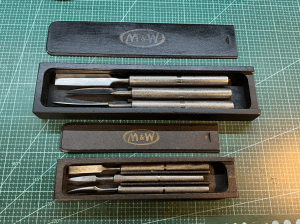
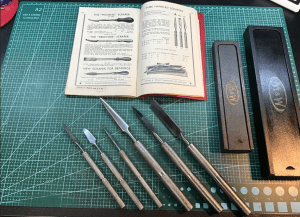
So last week I sold a nice little set of Moore & Wright bearing scrapers to Dave. I rescued them from a house clearance guy at a flea market. They were loose in a rusty old container together with their purpose made box. To be honest, I only had half an idea what they actually were but pieced them all together and had an incline they had “something about them” being Moore & Wright.

On receipt, Dave let me know he was a collector, and he soon had them pristine to sit alongside his other larger set and relevant catalogue. He sent the attached pics and don’t they all look well?

Great to see them find their way here where they will be loved and valued. So much better than ending up with the scrapman (God forbid) or buried in a quarry somewhere. Warms my heart!

Just to note, there is also a 12” version set and Dave’s looking for that to complete his collection. I’m scouring but just in case anyone can help, let me know and I’ll put him in touch with you.

Two happy boys!

Filed Under: News

You know that warm, fuzzy feeling……..

29 August 2024 by Neil

Just had an email that’s really brightened my day and reinforces why I really enjoy what I do on here at Vintage Hand Tools.

Here it is:

Hi Neil, set arrived and very pleased with it absolutely as described and perfect for me.  Kind regards Jon

I always aim to deliver the best possible service and remain grateful to my customers who support the venture. (Thanks to you all).


It’s gratifying to find these tools and move them onto genuine tradespeople and collectors, knowing they’ve hopefully found a good home and are back doing what they were made to do.

I’ve also come to realise I should perhaps leverage the feedback I get and set up a testimonial section on the website (note to self).

Here’s a few more (amongst many) positive comments I’ve received lately:

Thanks Neil Very surprised to find that this was “vintage” and not sold anymore- I bought mine nearly 45 years ago but have mislaid it- so useful and portable
Hi Neil Thank you for the follow up, all good thanks evri delivered yesterday morning. Kind regards George 
Hi Neil  Bevel received today all good  Many thanks Graham 
Hi Neil, Just received the spokeshave, it’s in excellent condition (I don’t think it has ever been used, still has the factory grind on the blade and linisher marks on the base).  I’m always on the look out for the odd item, I’m tooling up for the retirement workshop that will have to included the odd taught session with clients, so it was good to find another source of quality older tools.
Hi Neil. The square has arrived. It is a nice one in good order. Actually I need it to replace the missing one in my combination set. God knows where it went. Maybe I machined it into something in a moment of madness. The rule will come in very handy. Thanks for excellent service. All the best Mike.
Good Morning Neil, Just to let you know that the planes arrived in great condition and I’m very pleased. Thanks for getting them away quickly (Evri can be a law unto themselves) and for the great communication. I have bookmarked your site in my online tool sites. Good luck with the website. Thanks again. Matt

So that’s all I have for today as I happily type with a smiley face and warm, fuzzy feeling.

Have a look at the latest tools listed and all around the site. Hopefully there’s something that will tickle you and you can be confident you’ll always receive the same service.

Neil


Filed Under: Testimonials

Amazing Old Tools!

9 July 2024 by Neil

There’s something special about tools with a history. Every mark has a tale. At Vintage Hand Tools, we explore old stories. We bring past tales to life through our tools.

I began this because I admire old-time skill. Tools back then were more than just tools. They were a worker’s faithful friend and lifeblood, helping create masterpieces. Now, they are ready to join you on your journey.

I travel a lot, finding these tools at markets and the like. Every saved tool holds a piece of the past. Truth be told, they don’t make them like before. Where required, each refurb not only saves history but also celebrates great craftsmanship.

Our tools are not just unique. They hold the essence of past craftsmen that’s missing in today’s tools. Using one can change how you feel about your work. It makes creating more meaningful.

If this excites you, you’ll love our line-up at Vintage Hand Tools. Why not check out our collection? You might find a tool that calls to you or a rare find that reflects your style.

Vintagehandtools.co.uk. Jump into a world where each tool has a story.

Thanks for being here,

Neil Spruce

Vintage Hand Tools - There's something special about tools with a history

Filed Under: History, News

Father-in-Law Finds | Tailed Compass Rebate Plane & Double Headed Hatchet

11 January 2024 by Neil

No secret that I really enjoy putting the yards in to find lost treasures and beautiful (not always) tools that may otherwise find their way to the scrapyard or the tip.

Am also very lucky to have my father-in-law Peter who shares the same Car Boot/Flea Market interests, has come to appreciate what I’m looking for and developed an eye for the unusual / collectable.

He’s also “tight as a Scammel Wheelnut” when it comes to bargaining and I sometimes wonder how many things may have “slipped the net” when sellers won’t tolerate his hard bargaining tactics!

However I count my blessings and am grateful for some wonderful spoils, the latest of which has to be these two beauties which I think are going to have to be “keepers”, at least for the time being!

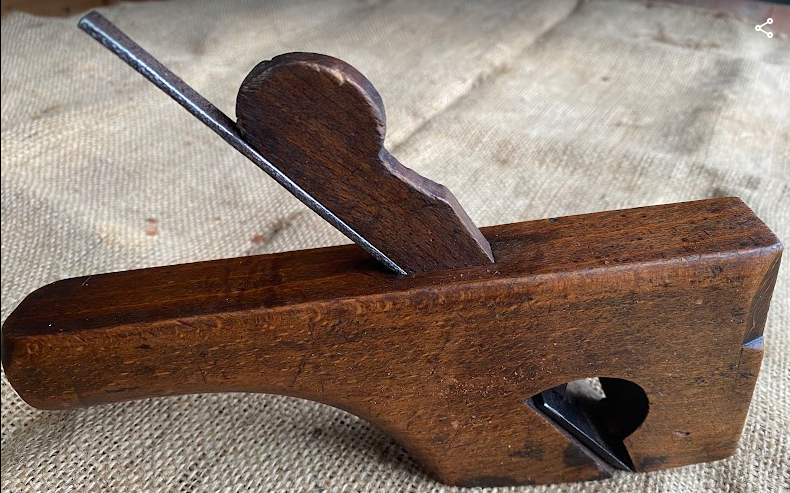
Wooden tailed compass soled rebate plane

I love this curved compass sole wooden tailed rebate plane with the handle grip rear end resembling an animal’s tail. No maker’s mark unfortunately but lovely condition when cleaned and sharpened nicely.

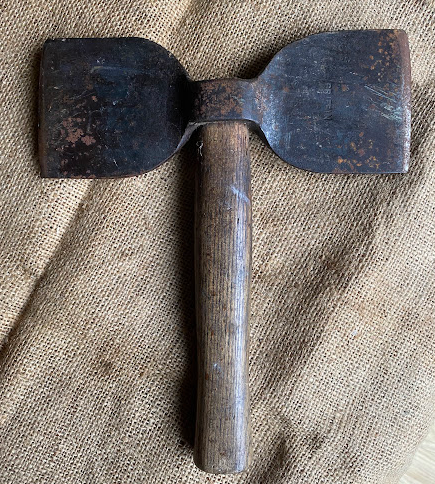
Griffin Double Headed Hatchet

Then what about this fella! Unusual indeed and I’ve never seen one for sure. Made by William Edwards & Son under the Griffin brand at Griffin works in Wolverhampton.

I’ve furnished Peter with a “shopping list” of select bits I’m looking for but getting him to part with the money, whatever their value is not an easy fix! I am nevertheless, very lucky!

Filed Under: News

  • Page 1
  • Page 2
  • Go to Next Page »

Footer

Privacy Policy · Cookies · T & C's · Returns · Copyright © Vintage Hand Tools 2025.

We use cookies on our website to give you the most relevant experience by remembering your preferences and repeat visits. By clicking “Accept All”, you consent to the use of ALL the cookies. However, you may visit "Cookie Settings" to provide a controlled consent.
Cookie SettingsAccept All
Manage consent

Privacy Overview

This website uses cookies to improve your experience while you navigate through the website. Out of these, the cookies that are categorized as necessary are stored on your browser as they are essential for the working of basic functionalities of the website. We also use third-party cookies that help us analyze and understand how you use this website. These cookies will be stored in your browser only with your consent. You also have the option to opt-out of these cookies. But opting out of some of these cookies may affect your browsing experience.
Necessary
Always Enabled
Necessary cookies are absolutely essential for the website to function properly. These cookies ensure basic functionalities and security features of the website, anonymously.
CookieDurationDescription
cookielawinfo-checkbox-analytics11 monthsThis cookie is set by GDPR Cookie Consent plugin. The cookie is used to store the user consent for the cookies in the category "Analytics".
cookielawinfo-checkbox-functional11 monthsThe cookie is set by GDPR cookie consent to record the user consent for the cookies in the category "Functional".
cookielawinfo-checkbox-necessary11 monthsThis cookie is set by GDPR Cookie Consent plugin. The cookies is used to store the user consent for the cookies in the category "Necessary".
cookielawinfo-checkbox-others11 monthsThis cookie is set by GDPR Cookie Consent plugin. The cookie is used to store the user consent for the cookies in the category "Other.
cookielawinfo-checkbox-performance11 monthsThis cookie is set by GDPR Cookie Consent plugin. The cookie is used to store the user consent for the cookies in the category "Performance".
viewed_cookie_policy11 monthsThe cookie is set by the GDPR Cookie Consent plugin and is used to store whether or not user has consented to the use of cookies. It does not store any personal data.
Functional
Functional cookies help to perform certain functionalities like sharing the content of the website on social media platforms, collect feedbacks, and other third-party features.
Performance
Performance cookies are used to understand and analyze the key performance indexes of the website which helps in delivering a better user experience for the visitors.
Analytics
Analytical cookies are used to understand how visitors interact with the website. These cookies help provide information on metrics the number of visitors, bounce rate, traffic source, etc.
Advertisement
Advertisement cookies are used to provide visitors with relevant ads and marketing campaigns. These cookies track visitors across websites and collect information to provide customized ads.
Others
Other uncategorized cookies are those that are being analyzed and have not been classified into a category as yet.
SAVE & ACCEPT